
Power, Path and Performance™ vocal training is a coaching method that combines a three-stranded cord of balanced breath support & control (Power), open throat channel flow (Path), plus focused messaging skill (Performance) to improve vocal health, vocal ability and vocal impact. (Also referred to as PPP Method.)
In short: Power builds efficient, low-tension breath support. Path directs that breath and sound through an open throat channel instead of a tight one. Performance gives the voice a specific reason to make a particular sound — a message, delivered to one heart.
The three cords of PPP are not just a convenient sorting system for vocal techniques; they synergistically affect each other. The posture changes that are part of getting the breath balanced and efficient also cause the throat channel to be more open and flexible, offering increased resonance and tonal nuance, while decreasing vocal fatigue and strain. The three directions the throat channel opens also cause the ribcage to open, enabling better breath control. The mental focus of communicating to One Heart causes changes in facial language that enable more openness and variability in the throat channel. It also causes a more confident body language and posture which affect the breath… and so on. Each strand is important, but it’s in mastering all three that you develop your best, safest, and most valuable voice.
The concepts of Power, Path and Performance™ are all backed by voice science. When a technique or training approach I use works, I look to voice science to understand WHY it works, and then use different practical ways to explain it so individual students can understand and apply the concepts for their unique vocal issues and performance situations.
Power
Breath is vitally important to vocal ability and vocal health. The kind of breath that most efficiently works the voice is a balance of breath support (air moving up) and breath control (air being held back). This kind of breath is a confident AND controlled compression engine for the voice, centered in the pelvic floor, not the chest, so that the ribcage remains wide and the diaphragm taut instead of too loose to control air. Uncontrolled breath pressure is the #1 cause of vocal fatigue, strain and damage. Unsupported breath can cause weak tone, limited range, pitch and other accuracy issues.
It can be tricky to get this balance right — using enough breath to evenly vibrate the vocal cords, but not too much to blow and stress them. I use the typical SOVT exercises like lip bubbles, tongue trills and straws, but I also developed another SOVT type exercise using a small 2″ water balloon, which can help create the back pressure that balances the breath just right for increased strain-free vocal range. I often use candles when sounding the voice, using just enough breath to make the flame dance but not enough to blow it out. I also use children’s bubble wands to train breath, with the goal to control the size of the bubbles.
But we also don’t want to have to focus on breath during performance, so I found that posture and stance, along with mic and instrument placement, can give the voice the controlled power it needs without the overthink. If there is hidden tension, I find it helpful to get the student moving, swaying, dancing. I’ve been known to use toys such as a hula hoop or mini tramp to loosen the body up.
Path
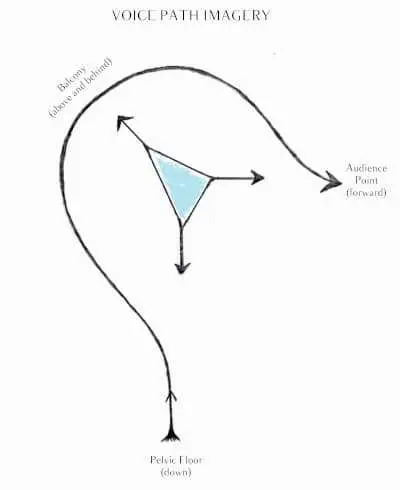
Path is the trajectory breath and sound travel — from the breath source, up through the throat channel, out to the listener’s heart. There are two ways this trajectory can move, and they produce opposite results.
The Pull Path is hook-shaped: breath energy starts low (the pelvic floor, or the heels if standing), lifts up and back, then rounds forward and out toward the listener. Moving on this path holds the ribcage and throat wide open — sound travels through resonating space instead of being squeezed through it.
The Push Path is L-shaped: breath is forced straight up and out, with no lift or backward arc. This shape narrows the ribcage and tightens the throat as the sound is pushed through — the more power you push, the tighter it gets.
The Pull Path leading through the open throat is also how the vocal registers mix without a break. When the voice is mixed well, high belted notes are not strained. The subtle motion of pulling the head back and rocking it down can allow the voice to feel like it’s one register instead of two, with chest voice gradually turning into head voice instead of breaking. This can mean huge reductions in vocal fatigue from singing high and loud.
An open throat channel also requires the participation of active eyes, a loose jaw and tension free tongue to articulate words and lyrics clearly, which is a major synergistic factor with the messaging skills of Performance.
The imagery of “Path” connects Power and Performance through the open and changeable throat channel. The shape of the path a singer uses determines whether their breath support (Power) stays efficient or fights itself, and whether their throat stays open enough to actually deliver the message (Performance) instead of just surviving the note.
Performance
Performance in the PPP method is communication skill. It is the prime directive for creating vocal sound, and dictates the final shape and color of that sound to elicit an emotional response. To train students for great performance, I borrow from Acting Technique. I question and then reorient the mental focus of singers and speakers from vague or mistaken understandings of who they should sing or speak to and why the voice should make a sound, to a singularly focused goal of delivering a specific message to the one heart the message is to, and getting the desired response in that heart’s body and facial language. The “One Heart” could be a specific person, the composite Heart of the audience or universe, oneself in the mirror, or God — the choice of heart needs to make sense with the lyrics or words. Communicating to One Heart turns the voice into a laser beam; talking to more than one turns the voice into a flashlight beam. The difference in vocal impact: a laser beam can cut a diamond; a flashlight beam can’t cut butter.
I often take my students through a simple acting exercise using the same words to communicate different messages to different hearts to get different responses. In this exercise they experience how knowing to WHOM and WHY they are singing or speaking, and what response they want to get, dictates the variables that create vocal sound and makes all the difference in the quality, authenticity and emotional impact of their performances. Most students go much deeper into their performances with much more confidence than they ever did before, because their voice suddenly knows what it’s doing.
How These Are Taught
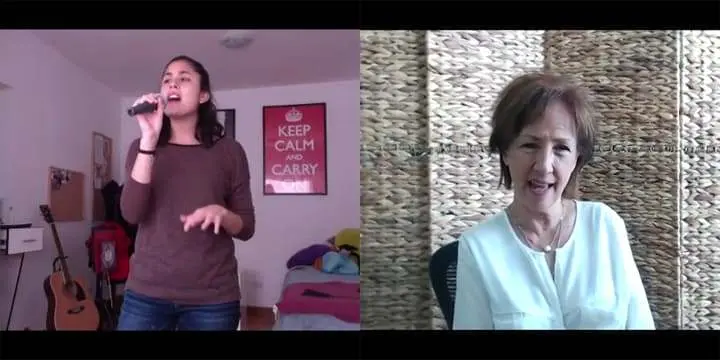
I use anatomy, imagery and vocal exercises to train both the cognitive mind and the automatic nervous system to adopt these techniques habitually for practical performance. Understanding concepts of basic anatomy helps the student trust the instruction. Picturing imagery can help the student understand how to try out the techniques. Almost all my exercises simultaneously train breath balance, throat channel openness and laser performance focus. Experiencing the voice feeling better and sounding richer gives the student the curiosity and drive to learn and practice the new techniques.
Within the three stranded cord of PPP, there are a plethora of possible vocal saboteur factors to be discovered with each student and each song. There can be jaw issues tightening the throat channel, frozen eyes limiting the ceiling of the open throat, problems with shaping certain vowels such as “e” and “oo” too tightly, habitual stances and pushing habits limiting breath control, lazy ear for pitch, thinking patterns that make the voice more of a flashlight beam than a laser beam, fears that cause tension, and much more. My job is to listen closely to my student to discover what the weakest area is and what combination of explanation and exercises works best for them. Shoring up one weakness with corrective technique almost always causes improvements in other areas, so improvement is both instant and ongoing in multiple directions.